Fakhruddin Properties
Scroll
Quote

Insights & Stories

Explore perspectives, market trends, and thought pieces from the world of real estate, design, and community living.
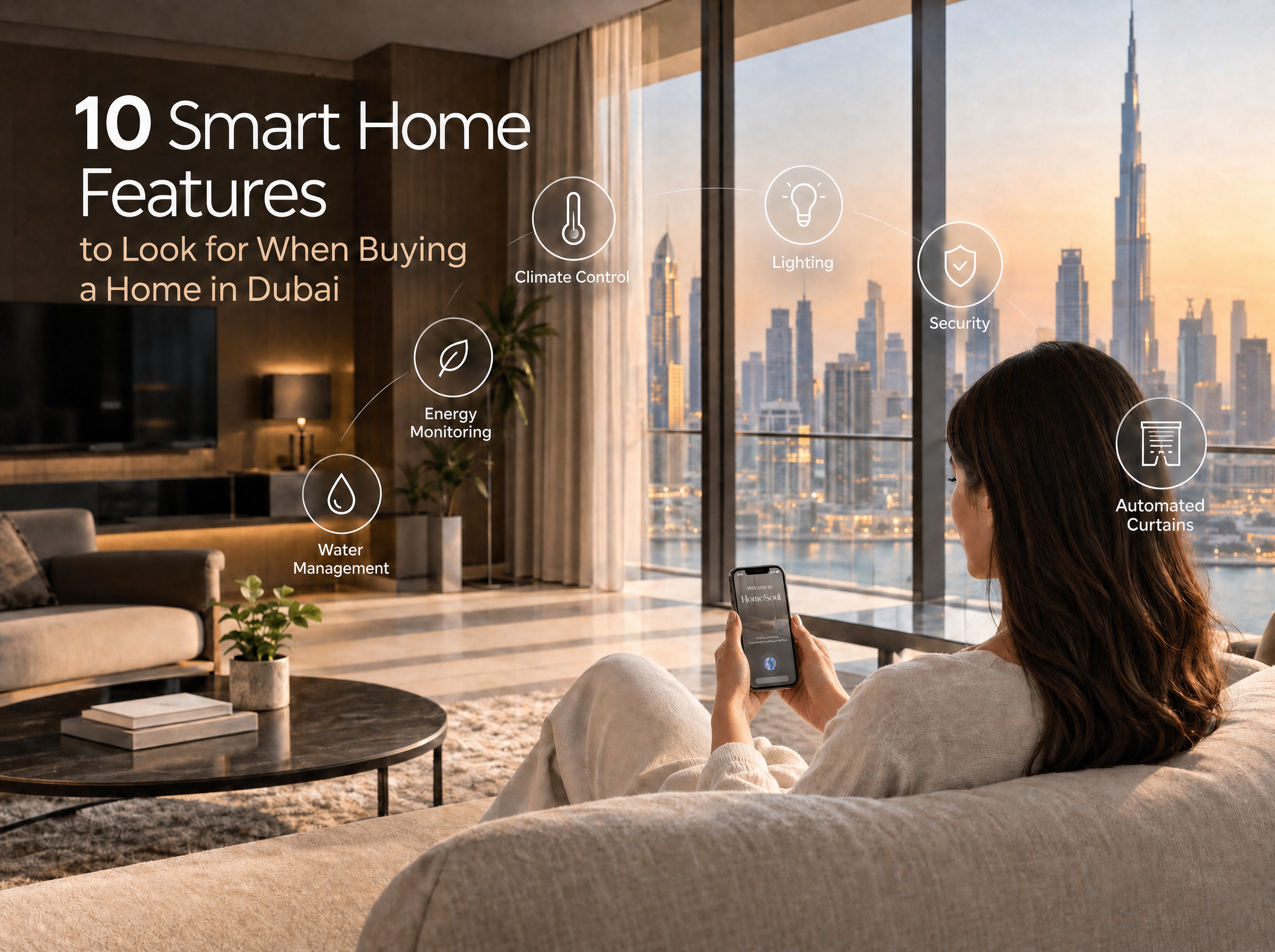
10 Smart Home Features to Look for When Buying a Home in Dubai
CalendarOct 16, 2026

10 Smart Home Features to Look for When Buying a Home in Dubai

Buying a home in Dubai involves more than comparing locations, floor plans and views. As intelligent technology becomes part of residential design, buyers are also looking at how a property can support comfort, security, energy efficiency and everyday wellbeing. But not every apartment marketed as a smart home offers the same experience.

The most useful smart home features in Dubai are those that work together, are easy to manage and continue to serve residents over time. Whether you are considering a smart apartment in Dubai, a waterfront residence or an investment property, these ten features can help you evaluate what genuinely matters.

1. Smart Climate Control for Dubai’s Weather

Cooling is central to daily comfort in Dubai. Smart thermostats and connected air conditioning systems can let residents set schedules, adjust temperatures remotely and avoid unnecessary cooling when a home is unoccupied. Some systems also respond to room occupancy.

When viewing a property, ask whether the climate controls are integrated with the building’s cooling system, what can be controlled remotely and whether manual operation remains available.

2. Intelligent Lighting and Automated Routines

Smart lighting can adjust brightness, colour temperature and timing through an app or compatible voice assistant. Residents might create brighter lighting for work and warmer settings for the evening, while occupancy sensors help prevent lights from staying on in empty rooms.

Look for simple controls and useful preset scenes rather than complicated settings that residents rarely use.

3. Smart Security and Access Control

Connected locks, video doorbells, access notifications and security sensors can offer additional visibility when residents are home or away. In some developments, facial recognition or other digital access technologies may be available in shared spaces.

Ask how access is authorised, how personal data is protected, what happens during a power or internet outage and whether residents can use a physical or offline backup.

4. Indoor Air Quality Monitoring and Filtration

Air quality is an important consideration for wellness-focused homes in Dubai. Smart sensors may measure particulate matter, humidity, temperature and carbon dioxide, while compatible ventilation and filtration systems can respond to changing conditions.

A monitor alone does not clean the air. Buyers should confirm which filtration or ventilation equipment is actually installed, how it is maintained and what information residents can view.

5. Automated Curtains and Blinds

Dubai’s strong sunlight can affect privacy, glare and indoor heat. Automated curtains and blinds can respond to schedules or sunlight levels, helping residents manage daylight and reduce unwanted heat gain.

For apartments with expansive glazing, ask whether the system is included, whether it can be operated manually and whether it connects to other home automation settings.

6. Smart Energy Monitoring

Smart energy management helps residents understand electricity consumption and identify opportunities to reduce waste. Depending on the system, users may be able to review usage trends, schedule connected devices or automate energy-saving routines.

Ask whether consumption data is available at apartment level and which devices are included. Energy savings depend on the building, equipment and residents’ habits, so avoid assuming a fixed reduction in bills.

7. Water Leak Detection and Smart Water Management

Water leak sensors can send alerts when moisture or unusual flow is detected. More advanced installations may support automatic shut-off valves. These features can be particularly practical for holiday homes and Dubai investment properties that are not occupied year-round.

Check which areas are monitored, who receives alerts and whether automatic shut-off is part of the standard installation.

8. Integrated Home Automation Through One App

A connected home becomes more convenient when lighting, cooling, curtains and access settings can be managed through one interface. An integrated platform can support routines such as an Away mode that adjusts selected systems when residents leave.

Before buying, request a live demonstration. Confirm which functions are genuinely integrated, whether the app has ongoing fees and who provides technical support. An AI-powered smart home should offer practical benefits, not simply an impressive label.

9. Smart Wellness and Sleep Features

Technology can also support daily comfort and recovery. Examples include circadian-inspired lighting schedules, bedroom temperature control, air purification and quieter automated routines. Some wellness-focused residential developments also connect home technology with broader lifestyle and wellbeing services.

Evaluate these features by how naturally they fit into everyday life. They can support a more comfortable environment, but should not be presented as guarantees of better sleep or medical outcomes.

10. Future-Ready Connectivity and System Support

Reliable Wi-Fi coverage, structured cabling, software updates and compatibility with established platforms help keep a smart home usable as technology evolves. Buyers should understand whether they own the equipment, whether systems can be expanded and what happens if a vendor stops supporting a device.

Ask about cybersecurity updates, service arrangements, warranties and the availability of offline controls. Long-term maintainability matters as much as new features.

What to Check Before Buying a Smart Home in Dubai

Before committing to a property, request a clear list of standard smart home features and optional upgrades. Ask the developer to demonstrate the system in use and confirm the costs of subscriptions, servicing and replacement parts.

Also review data privacy, cybersecurity, app access for multiple household members, manual overrides and how systems behave during internet outages. For off-plan properties, check which specifications are contractually confirmed rather than relying only on marketing visuals.

How Fakhruddin Properties Approaches Intelligent Living

At Fakhruddin Properties, intelligent technology is considered alongside wellness and sustainability, with a focus on making everyday living more convenient and considered. The brand’s approach includes connected-home experiences through HomeSoul, as well as technology-led services and features across its residential portfolio.

Features vary by development and residence. Buyers exploring projects such as Tréppan Vision should request the latest project-specific specifications to understand which smart home functions, access systems and services are included.

The Future of Smart Living in Dubai

The future of smart homes in Dubai is not simply about adding more connected devices. It is about integrating technology, thoughtful design and practical sustainability so homes can adapt to residents’ needs.

When comparing smart apartments in Dubai, prioritise systems that are easy to use, secure, maintainable and relevant to daily life. The smartest choice is a home where the technology has a clear purpose.

Frequently Asked Questions

What makes a home a smart home?

A smart home uses connected devices or integrated systems to automate and manage functions such as cooling, lighting, security and energy use, often through a central app.

Are smart homes in Dubai energy efficient?

Smart controls can help reduce avoidable consumption through scheduling, monitoring and automation. Actual efficiency depends on the building design, equipment and how the home is used.

What should I check before buying a smart apartment in Dubai?

Check which features are included, whether systems work together, the cost of maintenance, cybersecurity protections, internet dependency and long-term technical support.

Can I control smart home features remotely?

Many connected systems support remote control, but capabilities depend on the specific installation, internet connectivity and permissions. Ask for a demonstration before purchasing.

Read MoreArrow right
What Is a Longevity Home and How Does It Work?
CalendarOct 14, 2026

What Is a Longevity Home and How Does It Work?

For years, the idea of a healthy home was largely associated with natural light, ventilation and perhaps access to a gym or swimming pool. Today, that definition is evolving.


As people become more conscious of sleep, air quality, stress, recovery and long-term wellbeing, attention is turning towards the role the home itself can play. This has given rise to a new approach to residential design: the longevity home.


But what exactly makes a home a longevity home, and how does it work?


What Is a Longevity Home?


A longevity home is a residence designed to support healthier living over the long term. Rather than treating wellness as an occasional activity, it brings elements that support wellbeing into the environment and everyday routine.


The concept is connected to a broader shift in how longevity is understood. Living well is influenced not only by exercise or diet, but also by factors such as the air we breathe, the water we consume, the quality of our sleep, our ability to recover from physical and mental stress, and the environments we spend time in.


Considering how much of everyday life happens at home, the residential environment has an important role to play.


A longevity home therefore looks beyond conventional comfort. Its design, technology, amenities and services work together to create an environment that makes healthier choices easier to incorporate into daily life.


How Does a Longevity Home Work?


There is no single feature that transforms a residence into a longevity home. Instead, it is the combination of multiple elements working together.


1. Creating a Healthier Indoor Environment


Indoor environmental quality is one of the foundations of longevity-focused living.


Advanced air purification and filtration systems can help reduce airborne pollutants and improve the quality of indoor air. Water systems may also be designed to provide enhanced drinking water within the home.


These features work quietly in the background. Residents do not necessarily need to change their routines to benefit from them. The environment itself has been designed with wellbeing in mind.


2. Making Recovery Part of Everyday Life


Recovery has moved beyond the world of professional sport. Increasingly, people are recognising its role in managing demanding lifestyles and supporting overall wellbeing.


Longevity-focused developments may therefore incorporate dedicated recovery and wellness experiences such as red-light therapy, cryotherapy, floatation therapy, hyperbaric oxygen therapy, saunas and cold plunges.


The important distinction is accessibility.


Instead of travelling to separate wellness or recovery centres, residents can have these facilities within their living environment. A recovery session can become part of an ordinary day rather than something reserved for an occasional wellness retreat.


3. Supporting Movement and Mental Wellbeing


Longevity is not only about what happens inside the home.


Thoughtfully planned residential environments can encourage people to move, spend time outdoors, slow down and connect with their surroundings. Fitness areas, walking and jogging spaces, swimming pools, meditation areas, gardens and landscaped outdoor environments can all contribute to a more active and balanced lifestyle.


The principle is simple: when healthier choices are conveniently built into the places people use every day, they become easier to maintain.


4. Using Intelligent Technology to Simplify Daily Life


Technology also plays an important role in the longevity home, but its purpose should go beyond adding more screens and controls.


AI-enabled smart home systems can help residents manage different aspects of their environment more intuitively, while connected platforms can bring home controls and services together in one place.


Technology can also support greater convenience and accessibility. When repetitive tasks become simpler and the home responds more effectively to the resident, technology becomes part of creating a living experience centred around ease and wellbeing.


5. Designing for Different Stages of Life


A true longevity home should also consider how people's needs may change over time.


A home that works well today should continue to feel comfortable and supportive in the years ahead. This can influence everything from accessibility and layouts to wellness services and technology.


It shifts the conversation from simply designing a property to creating an environment capable of supporting different stages of life.


From Wellness Amenities to a Wellness Ecosystem


Perhaps the biggest difference between a conventional residence and a longevity-focused home is integration.


Adding a gym to a building does not automatically make it a wellness development. Neither does installing one piece of smart technology or introducing a single wellness amenity.


A longevity home works when these individual elements connect.


Cleaner indoor environments, intelligent technology, recovery facilities, movement, relaxation, nature and resident-focused services become parts of the same ecosystem. The objective is not to tell residents how to live, but to create surroundings that make living well more convenient.


This thinking is increasingly shaping the approach of Fakhruddin Properties, where wellness, sustainability and intelligent technology are considered interconnected parts of the residential experience. Within the Tréppan Living concept, the focus extends beyond the physical home towards creating environments that support everyday wellbeing through thoughtful design, technology and wellness-focused experiences.


The Future of the Home Is About How It Makes Us Feel


For decades, property has largely been discussed in terms of location, size, design and amenities. Those considerations will remain important, but another question is becoming increasingly relevant:


What does living here do for my everyday wellbeing?


That question sits at the heart of the longevity home.


It represents a shift from homes designed primarily for occupation towards environments designed around the way people want to live, recover and feel over time.


Longevity living is not about promising a longer life. It is about creating the conditions for living better every day.


And as our understanding of wellbeing continues to evolve, the most forward-thinking homes may not simply be places we live in. They may become active participants in how well we live.

Read MoreArrow right
Tréppan Vision Brings Robotics and Intelligent Living to DLRC
CalendarOct 6, 2026

Tréppan Vision Brings Robotics and Intelligent Living to DLRC

A home’s value extends to how well it supports the people living in it. At Tréppan Vision by Fakhruddin Properties, that thinking shapes everything from adaptable layouts to robotics across the building. Set within Dubai Land Residence Complex (DLRC), the mixed-use development brings wellness, sustainability and intelligent technology into a community designed for living and working.


Located in Wadi Al Safa 5 within Dubailand, DLRC offers access to Dubai Silicon Oasis and Dubai International Academic City. Within this setting, the AED 700 million Tréppan Vision development combines residences, offices and retail spaces with services designed to make everyday life easier.


A connected community for living and working


Tréppan Vision comprises 463 units: 408 residential apartments, 48 office suites and seven retail units. The residential offering includes 252 smart studios, 108 one-bedroom residences and 48 two-bedroom residences.


Bringing homes, workspaces and retail together create a setting that accommodates different daily routines. The same thinking informs the development’s use of technology, with connected services extending from individual residences into shared spaces across the building.


Advanced robotics with an everyday purpose


Tréppan Vision incorporates eight dedicated robotic services to support residents and building operations. By assisting with practical tasks across the community, these services bring robotics into the everyday experience of the development.


Smart Care adds a wellness dimension to this approach. Developed in partnership with a healthcare provider, the robotics-enabled service is planned to support regular wellness rounds, medication delivery, teleconsultations and basic vital checks. These functions are intended to make selected healthcare services more accessible to residents.


Within each residence, AI-enabled automation connects smart entry, automated curtains, lighting and climate control. HomeSoul, Fakhruddin Properties’ AI-enabled platform for home management and services, brings these functions together, giving residents a central way to manage their home and access services.


Homes that adapt to changing needs


A household’s needs can change over time, whether a family grows or an additional room becomes necessary. Tréppan Vision responds with convertible layouts that allow one-bedroom Flexi homes to be reconfigured into two-bedroom layouts, while two-bedroom units can be adapted into three-bedroom spaces.


This flexibility gives residents more options within their existing home. It makes the layout part of the development’s practical appeal, alongside the technology and services that support daily living.


Sustainability built into daily operations


Tréppan Vision’s approach to sustainability includes systems for managing waste, food, energy and water. Integrating these into building operations is intended to make responsible resource use part of the community’s everyday routines.


On-site waste segregation and responsible collection support Fakhruddin Properties’ target of diverting up to 90% of building waste from landfills. The emphasis is on how waste is handled throughout the community, with a clear diversion target guiding that approach.


Property options for buyers and investors


For buyers considering a home in DLRC, Tréppan Vision brings together adaptable layouts, connected services and access to nearby education and employment hubs. Its range of apartment types offers options for different household needs, while the offices and retail spaces add to the development’s mix of uses.


For investors, the residential, office and retail components offer a choice of property types within one development. Robotics, HomeSoul and convertible layouts give buyers specific features to consider alongside location and their intended use of the property.


These features reflect Fakhruddin Properties’ focus on wellness, sustainability and intelligent technology, connecting its broader development philosophy with the way homes and shared spaces are designed to function.


Intelligent living shaped around everyday needs


At Tréppan Vision, intelligent living takes shape through practical choices. Convertible layouts respond to changing household needs, HomeSoul connects home functions and services, and robotics supports tasks across the building.


Together with planned Smart Care services and systems for responsible resource use, these features bring Fakhruddin Properties’ vision into the daily experience of living in DLRC. The result is a development designed around how residents use their homes and the community around them.

Read MoreArrow right
Tréppan Living Newsletter
CalendarSep 17, 2026

Tréppan Living Newsletter

Better You. Better Life. Better Planet.
1. EV Chargers
Smart charging points are open to all residents with an electric or plug-in hybrid vehicle. Each bay delivers up to 22 kW, roughly 40–120 km of range per hour of charging.
To start, open the Treppan Community app, register your vehicle and number plate, and tap Start Charging at the bay, or hold your RFID card to the reader. Energy is billed per kWh to your resident account, with live session status, kWh delivered and cost visible in the app.
A note on courtesy: these bays are for charging, not parking. Vehicle needs to be moved once your session completes.
Why it matters:
An electric car uses about 16 kWh per 100 km. At DEWA's grid factor of 0.44 kgCO₂e/kWh, that is roughly 7 kg of CO₂e per 100 km, against about 18 kg for a comparable petrol car. Over 15,000 km a year, that is around 1.6 tonnes of CO₂e avoided per vehicle, and it counts towards our building's Scope 3 reduction reporting.
Register your EV in the Treppan Community app. Remember: Look after the planet, It looks after you.
2. Hydroponics — The Greenhouse Café Farm
Inside the greenhouse, a hydroponic system supplies the leafy greens served in our café. Lettuce, rocket, basil, mint, pak choi and other greens grow in nutrient-enriched water rather than soil, with their roots suspended in a continuously circulating film that delivers exactly the minerals each crop needs.
Because that water recirculates in a closed loop instead of draining away, the system uses up to 90% less water than conventional field farming. There is no soil, so there are no soil-borne pests, and therefore no pesticides at any stage. Nutrient levels, water pH and root zone temperature are monitored continuously, so every head of lettuce grows under near-identical conditions.
A lettuce goes from seedling to harvest in about 15–20 days, and from harvest to your salad bowl in minutes. Leafy greens begin losing vitamin C and folate within hours of cutting, so freshness here is measurable nutrition rather than a marketing word. Nothing is packed, chilled, trucked or flown.
Why it matters:
Salad loses its value quietly. From the moment a leaf is cut it keeps respiring, and vitamin C, folate and carotenoids start breaking down, a significant share of them within days, even under refrigeration. Produce that has to survive a long journey is also picked before full maturity and chosen for varieties bred to travel well rather than to taste good or carry the most nutrition. Bagged salad adds a chlorine wash on top of that, which strips more vitamin C again.
Growing where it is eaten removes those compromises. Our leaves are cut at full maturity, hours before service, and go to the kitchen unwashed in chlorine and unpacked in plastic. Because there is no soil and no manure-based fertiliser, the food-safety risk that drives most bagged salad recalls simply isn't there. And because nutrients are dosed precisely, we can grow tender, flavour-forward varieties that would never make it through a supply chain intact.
The result is a salad with more of what you eat salad for — and it tastes like it.
![Untitled (720 x 510 px) (1).png](https://admin.fakhruddinproperties.com/uploads/Untitled_720_x_510_px_1_b2c61106ae.png)
3. Treppan Points
Treppan Points recognises residents for the things that make this a better place to live — segregating waste properly, sharing what you don't need, cutting your carbon footprint, and showing up for the community. You earn automatically as you go, then spend the points on things you actually want.
Getting started
There are one-time rewards waiting before you've done anything else. Sign up in the Treppan Community app and complete your profile in full and you receive points to get started.
Sustainability actions:
• Dispose your wet waste bag (green)
• Purchase your first waste bag pack
• Carbon footprint impact
Community actions:
• Donate food to the sharing fridge
• Share a book
• Receive a book
• Attend a community event
• Reach 53 likes
Carbon footprint, measured fairly
Your monthly carbon points are calculated against your own household's baseline, not against your neighbours'. A studio with one resident and a four-bedroom home with six people can't be judged on the same reading, so they aren't. Reduce your impact against your own recent average and you earn, whether you live alone or with a full household.
How you spend
Points convert to discounts in café, refill station top-ups, and EV charging credit.

Read MoreArrow right
Day 3 at IPS 2026: Exploring the Growing Value of Wellness in Real Estate
CalendarSep 9, 2026

Day 3 at IPS 2026: Exploring the Growing Value of Wellness in Real Estate

The final day of IPS 2026 brought three memorable days of conversations, experiences and industry engagement to a fitting conclusion for Fakhruddin Properties. From the morning onward, the stand remained active with visitors discovering Tréppan Vision, meeting the team and exploring the technologies and ideas behind the new development. As Titanium Sponsor of IPS 2026, Fakhruddin Properties used the event not only to present a new project, but also to encourage a wider discussion about the future of real estate and the growing role of wellness within it.


A Conversation About the Wellness Premium


The key session of Day 3 was a fireside chat featuring Mr. Yousuf Fakhruddin, CEO and Managing Partner of Fakhruddin Properties, on "The Wellness Premium." The conversation examined why wellness focused real estate is attracting increasing attention from buyers and investors, and whether features that support healthier living can create measurable long-term value. As expectations evolve, wellness is no longer understood as a collection of standalone amenities. A gym, swimming pool or landscaped area may contribute to a project, but genuine wellness begins with the fundamentals of the environment. The discussion explored how air and water quality, natural light, movement, recovery, privacy, intelligent technology and opportunities for social connection can collectively influence the way residents feel and live. Mr. Yousuf also shared how this thinking is reflected in Fakhruddin Properties' approach to development. Rather than treating wellness as an additional feature, the company considers it from the earliest stages of planning and design. This philosophy can be seen across Tréppan Vision, where intelligent systems are designed to improve convenience while wellness focused features support residents throughout their daily routines. The project demonstrates how technology can become more meaningful when it responds to genuine human needs. The conversation also addressed the commercial value of wellness. Buyers are becoming more informed and are looking beyond visible finishes to understand how a property may support their lifestyle over time. This shift is encouraging developers to think more deeply about what lasting value truly means.


A Stand Filled with Energy


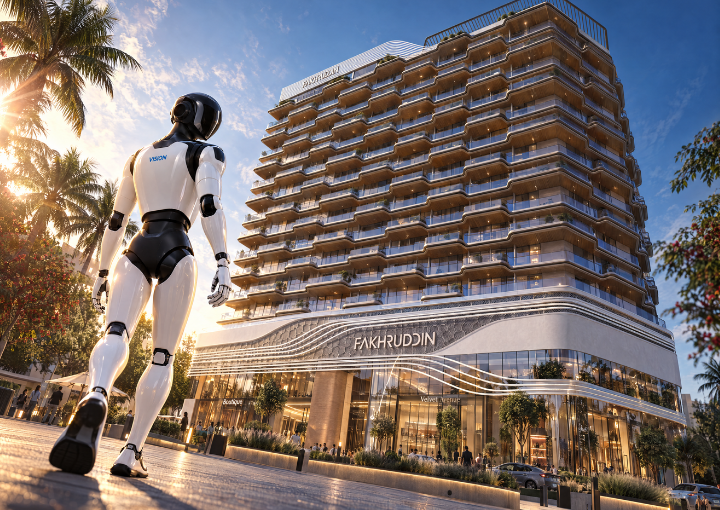
Away from the stage, the Fakhruddin Properties stand remained full of activity. Visitors interacted with Vision, the humanoid robot, explored the project model and met the team to learn more about Tréppan Vision. Different activities across the stand created a lively and engaging atmosphere, while continuous conversations reflected the strong interest generated throughout the event. The stand became a space where technology, wellness and human interaction came together. While advanced robotics attracted attention, the conversations that followed focused on how these innovations could make everyday life more convenient, connected and responsive.


Three Days, One Thoughtful Vision


IPS 2026 began for Fakhruddin Properties with the launch of Tréppan Vision and continued through important conversations about longevity, wellness, technology and the future of development. Across all three days, the response from visitors, industry leaders and dignitaries demonstrated a growing appetite for real estate that delivers more than physical space. People are increasingly seeking environments that understand their needs, simplify their routines and contribute to a better quality of life. The conclusion of IPS 2026 therefore represented more than the end of an exhibition. It marked the continuation of a larger journey for Fakhruddin Properties. A journey guided by a clear belief: life should be thoughtfully built.

Read MoreArrow right
Day 2 at IPS 2026: Longevity, Leadership and Meaningful Connections
CalendarSep 8, 2026

Day 2 at IPS 2026: Longevity, Leadership and Meaningful Connections

Following the successful launch of Tréppan Vision, Day 2 of IPS 2026 brought another full programme of meaningful conversations, distinguished visits and valuable industry engagement for Fakhruddin Properties. The Fakhruddin Properties stand remained a vibrant meeting point throughout the day, welcoming VIPs, dignitaries, government representatives, investors and real estate professionals. As Titanium Sponsor of IPS 2026, the company continued to share its approach to the future of development, one where wellness, sustainability and intelligent technology are considered essential parts of everyday life.


Welcoming Distinguished Guests


Among the day's highlights was a visit from the Dubai Land Department delegation. The delegation was welcomed by the leadership team and introduced to Tréppan Vision, including its mixed-use concept, advanced robotics, intelligent home systems and wellness focused features. During the visit, Mr. Yousuf Fakhruddin was presented with a special token of appreciation, marking the occasion and recognising Fakhruddin Properties' participation at IPS 2026. The visit also created an opportunity to discuss how innovation can support Dubai's evolving real estate landscape and strengthen the city's position as a global destination for investment, technology and future focused development. Fakhruddin Properties also welcomed several VIPs and dignitaries to the stand, leading to valuable conversations about Tréppan Vision and the broader direction of Dubai's property market.


Understanding the Longevity Factor


One of the defining moments of Day 2 was the keynote address by Mr. Yousuf Fakhruddin, CEO and Managing Partner of Fakhruddin Properties, titled "The Longevity Factor." The session explored a fundamental question: can the places where people live contribute to a longer and healthier life? During the keynote, Mr. Yousuf explained that longevity is not simply about increasing lifespan. It is about improving the quality of those years by creating environments that support physical, mental and social wellbeing. The presentation began with two essentials that influence people every day: air and water. Indoor air quality can be affected by paint, furniture, adhesives, flooring and other materials that release pollutants into enclosed spaces. Because people spend a large part of their lives indoors, the quality of the air within a home can have a meaningful effect on everyday wellbeing. Water quality was also explored as a fundamental part of healthier living. Clean, carefully treated water supports hydration and essential bodily functions, making it an important consideration within wellness focused development. The keynote then moved to recovery, an aspect of wellbeing that is often overlooked. It highlighted therapies such as hyperbaric oxygen therapy, cryotherapy, red light therapy, floatation therapy and cold plunge experiences. These approaches are increasingly becoming part of modern wellness routines as people place greater importance on rest, renewal and long-term vitality. Movement, nutrition and human connection were also central to the discussion. The session examined how thoughtful spaces can encourage residents to remain active, spend time outdoors and build stronger relationships with the people around them. The keynote concluded with a clear message: true longevity is not only about adding more years to life, but adding more life to those years.


Continuing the Conversation


Throughout Day 2, visitors experienced Tréppan Vision through conversations, interactive displays and encounters with Vision, the humanoid robot. The strong engagement at the stand reflected a growing interest in developments that look beyond conventional amenities and consider how the entire living environment can support wellbeing. Day 2 connected leadership, innovation and health through one central idea: when buildings are designed around people, they can play a more meaningful role in the way people live today and, in the years, ahead.

Read MoreArrow right
CallWhatsAppPay Now