Insights & Stories
Explore perspectives, market trends, and thought pieces from the world of real estate, design, and community living.
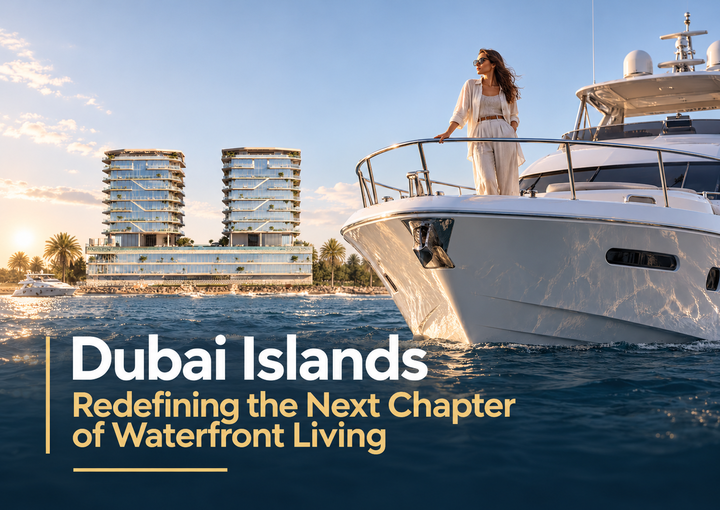
Dubai Islands: Redefining the Next Chapter of Waterfront Living
Some addresses follow trends but there are a few that set them. Dubai Islands is firmly the latter. Rising from the waters off the Deira coastline, this is not just another development on the Dubai map. It is a bold reimagining of what waterfront living in one of the world's most ambitious cities can look like, and the world is starting to pay attention.
For decades, Dubai's waterfront story was told in other neighbourhoods. But Dubai Islands marks a new chapter, one written with a different hand, a deeper understanding of what people want when they choose to live by the water, and a scale that reflects the city's relentless appetite to keep raising the bar.
An Island Address Like No Other
Dubai Islands is a cluster of five distinct islands spanning over 17 square kilometres of prime coastal land, strategically positioned to offer residents and visitors an experience that balances seclusion with connectivity. Dubai Islands, developed under the Nakheel umbrella, is one of the most significant waterfront projects in Dubai to emerge in recent years, and it carries the same DNA that made Palm Jumeirah a global icon.
What sets Dubai Islands apart is not just the water views or the beachfront access. It is the deliberate layering of lifestyle, nature, and design into a single cohesive destination. Beach by Dubai, the retail and leisure promenade, anchors the social life of the islands, drawing people in with a blend of dining, retail, and open-air experiences that feel native to the coast rather than imposed on it. A Dubai island resort ecosystem is taking shape around it, with hospitality brands already staking their claim on this emerging address.
The result is an island community that feels like it belongs to the sea, not just beside it.
Why Waterfront Living Hits Differently Here
Waterfront properties in Dubai Islands carry a quality that goes beyond the obvious. Yes, the views are extraordinary. Yes, waking up to open water changes the rhythm of your day. But what Dubai Islands offers is something more layered than scenery.
There is a stillness here that the rest of the city does not offer. The pace slows. The air changes. The distance from the mainland feels intentional, not inconvenient. This is by design. Waterfront projects in Dubai have always commanded a premium, but Dubai Islands is pushing that premium into new territory by offering not just proximity to water but immersion in it. The islands are planned around their coastline, not in spite of it.
For those seeking Dubai island villas or Dubai islands houses with direct beach access, the options being developed here represent some of the most considered residential thinking the city has produced. These are not homes with a sea view added on. They are homes where the sea is the starting point.
How Fakhruddin is Redefining Dubai Island Story
Among the developers who saw the potential of Dubai Islands early, Fakhruddin Properties made a deliberate choice to plant roots here with two distinct projects, each expressing a different dimension of the island lifestyle.
Tréppan Serenique is Fakhruddin's wellness and longevity-driven residential offering on Dubai Islands. The philosophy here goes beyond aesthetics. Every detail, from air quality systems to mineralised water from the tap to the intelligent technology woven through the home, is designed to make the act of living actively better for you. On an island already defined by its natural environment, Tréppan Serenique adds a layer of biological intentionality. This is a home that works for your health as much as it works for your senses.
Hatimi Residences takes a different but equally considered approach. Structurally, the project is already well advanced, with both towers topped out, facades taking shape, and interiors progressing floor by floor. Hatimi Residences positions its residents inside one of Dubai's most anticipated waterfront communities, with all the connectivity, lifestyle infrastructure, and long-term value that Dubai Islands is being built to deliver.
Life inside a Fakhruddin home on Dubai Islands is designed to feel different from the moment you walk in. The technology around you is not there to impress, it is there to remove every unnecessary friction from your day, quietly and intelligently. This is sustainable living not as a concept but as a daily experience, built into the walls, the systems, and the rhythm of the home itself.
On an island that already offers the rare gift of open water, open sky, and natural breathing room, Fakhruddin adds a layer of living that goes deeper. A home that actively contributes to your health, your calm, and your years. That is not a feature. That is a philosophy.
An Island That Thinks Ahead
Dubai has always built for the future it intended to have, not the present it was handed. Dubai Islands carries that same conviction. It is a long-term vision for how a global city expands its waterfront identity, attracts the world's attention, and gives its residents a life that simply cannot be replicated anywhere else.
The islands are rising. The community is forming. And the address, once established, will be one that people wish they had chosen sooner.
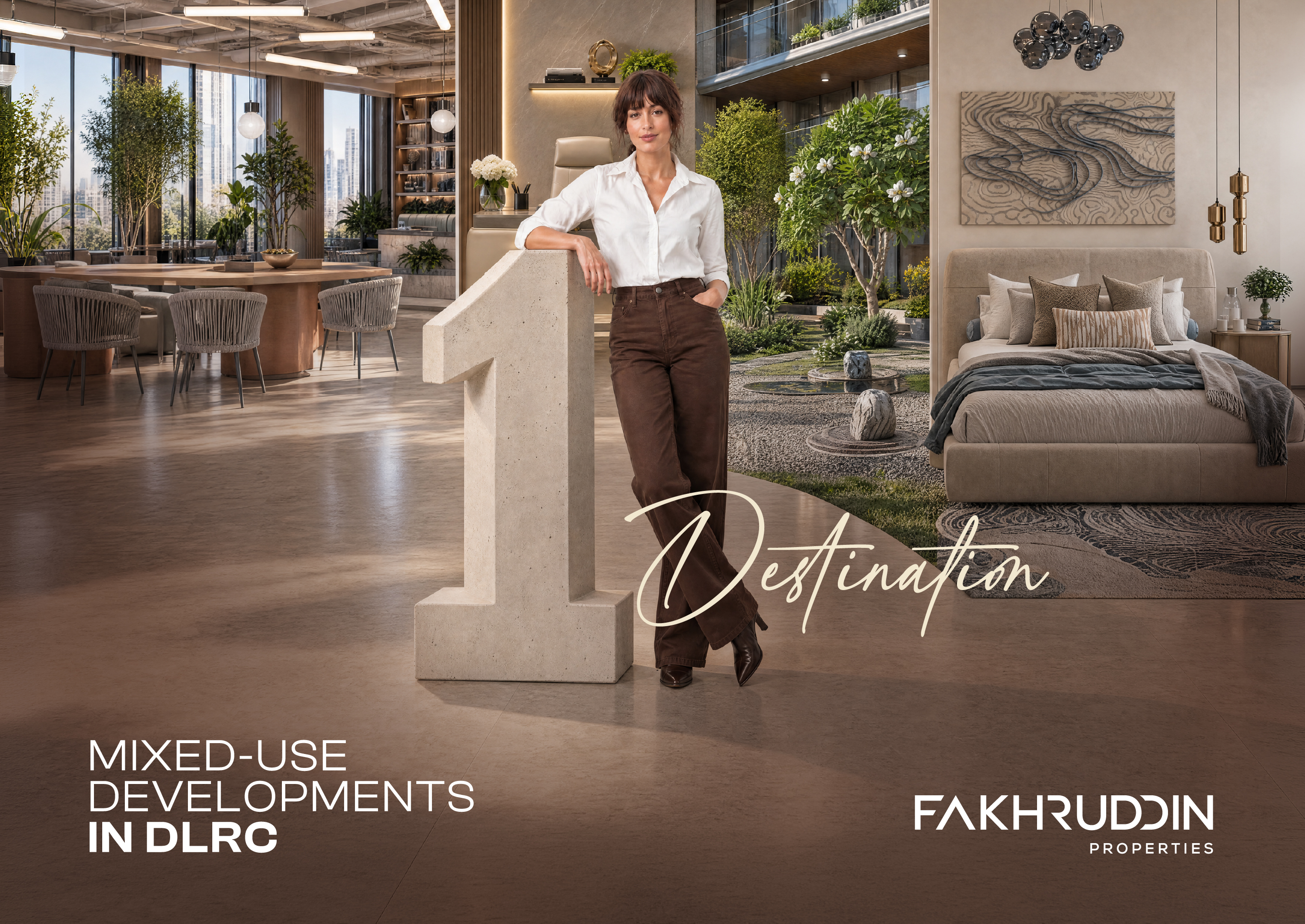
Mixed-Use Developments in DLRC: Bringing Living and Working Together
What if your home, workplace, favourite café and everyday essentials were all within easy reach? What if moving between the different parts of your day didn’t mean spending hours on the road?
Think about a typical weekday. A morning coffee before heading to work, a quick stop at the supermarket, an evening workout or dinner with friends. These are everyday activities, yet they often involve travelling between different locations, navigating traffic and planning schedules around the time it takes to get from one place to another.
Now imagine a neighbourhood where many of these needs are brought together. Your office is a short walk from home, shops and restaurants are close by, and spaces for recreation, wellness and social interaction are part of the same destination. This is the idea behind mixed-use developments, which bring residential, commercial, retail and lifestyle spaces together in a thoughtfully planned environment.
For residents, it can mean greater convenience and more flexibility in how they spend their time. For professionals, it offers the possibility of working closer to home. For businesses, a combination of residents, office users and visitors can create opportunities to connect with different customers throughout the day. The benefits extend beyond individual convenience, helping create neighbourhoods that remain active beyond traditional working hours.
As Dubai continues to expand, mixed-use developments are becoming an important part of how residential and commercial spaces are planned. Rather than treating living, working, shopping and leisure as separate activities, they explore how these experiences can complement one another.
But what makes a mixed-use development truly successful, and why is this approach particularly relevant to emerging communities such as Dubai Land Residence Complex (DLRC)?
Dubai Land Residence Complex: Understanding the Community
Located within the wider Dubailand district, Dubai Land Residence Complex (DLRC) is a master-planned, mixed-use community that brings together residential neighbourhoods, commercial spaces and everyday amenities. Spread across nearly 14 million square feet, the development is designed to accommodate more than housing, with space allocated for businesses, retail, hospitality, education, healthcare and recreation.
Positioned along Dubai–Al Ain Road (E66) and Emirates Road (E611), DLRC benefits from access to established destinations such as Dubai Silicon Oasis and Dubai International Academic City. Its location places residents and businesses within reach of educational institutions, employment centres and major road networks, while the community itself continues to develop its own range of facilities and services.
What makes DLRC particularly interesting is how its master plan brings different functions together. Alongside residential buildings, the planned community infrastructure includes schools, healthcare facilities, mosques, parks, hotels, retail outlets and spaces for commercial activity. Rather than relying entirely on facilities elsewhere in Dubai, the community is structured to support a wider range of daily needs within its boundaries.
DLRC is also an established residential address, with completed buildings operating alongside newer developments. This combination allows the community to evolve as additional projects introduce new housing options, commercial spaces and lifestyle facilities.
For someone considering a home or business premises in DLRC, the appeal goes beyond the individual property. It is also about the surrounding environment, the availability of everyday services and how the different parts of the community can support one another.
Benefits of Mixed-Use Living and Working in DLRC
Everyday convenience within reach
Consider the small journeys that make up a typical week: picking up groceries, visiting a pharmacy, attending a fitness class or meeting someone for coffee. Individually, these activities may seem insignificant, but together they can take up a considerable amount of time.
In a mixed-use community such as DLRC, the presence of residential buildings alongside retail and essential services creates opportunities to manage more of these activities locally. As additional facilities become available, residents may find it easier to combine errands, leisure and personal commitments without travelling to different parts of the city.
More flexibility between living and working
The relationship between home and work is also changing. For entrepreneurs, freelancers and professionals who value flexibility, having commercial spaces within a residential community offers an alternative to keeping these two parts of life geographically distant.
Imagine a business owner who lives in DLRC and operates from an office in the same neighbourhood. A shorter journey could mean more time with family, greater flexibility during the working day and easier access to nearby services. While not every resident will work locally, the availability of commercial spaces creates possibilities that a purely residential neighbourhood may not offer.
A wider customer base for local businesses
Mixed-use communities can also create an interesting environment for retailers and service providers. Different groups of people use a neighbourhood at different times, bringing varying needs and spending patterns.
A café, for instance, might welcome residents stopping by for breakfast, professionals during their lunch break and families meeting in the evening. Similarly, convenience stores, pharmacies, salons and other everyday services may cater to both the residential population and people working nearby.
This combination can help support activity throughout the day rather than concentrating it around a single purpose or schedule. For businesses considering DLRC, understanding the surrounding residential population, commercial activity and accessibility is therefore an important part of evaluating a location.
A community that supports different stages of life
The needs of a neighbourhood are rarely fixed. A young professional may initially prioritise proximity to work and leisure facilities, while a growing family may place greater importance on schools, healthcare and outdoor spaces. Business owners may look for accessible premises that allow them to remain connected to their customers.
A mixed-use master plan provides the framework for these different requirements to coexist. In DLRC, the planned combination of residential, educational, healthcare, recreational and commercial facilities reflects this broader approach to community development.
Of course, the presence of different property types alone does not guarantee a convenient lifestyle. The quality of the development, the accessibility of amenities and how well the various spaces function together are equally important.
For buyers considering property in DLRC, this raises another question: what should they look for in a mixed-use development that is designed to meet both their present needs and future priorities?
What to Look for When Buying Property in a Mixed-Use Development
Having homes, offices, shops and lifestyle facilities within one development sounds appealing. But does having everything in one place necessarily make it a better place to live or work?
Not quite. The real value of a mixed-use development lies in how thoughtfully these different spaces are planned, how easily people can access them and whether they genuinely improve everyday experiences.
For anyone exploring properties for sale in DLRC, looking beyond the apartment layout, office size or list of amenities can help them make a more informed decision. Here are some important considerations.
How well are the different spaces connected?
A mixed-use development should make it easy to move between residential, commercial and shared spaces without compromising privacy or comfort.
For example, can residents access everyday conveniences without navigating busy commercial areas? Are office entrances clearly separated from residential access points? Is parking planned to accommodate residents, employees and visitors?
Thoughtful circulation, convenient access and well-defined spaces can make a considerable difference to how comfortably a development functions.
Do the amenities support everyday needs?
An impressive list of amenities may catch a buyer’s attention, but their usefulness matters more than the number.
Consider whether the development offers facilities that complement your routine. A fitness centre or wellness space might be important to someone with a demanding work schedule. Families may prioritise children’s play areas and safe recreational spaces, while professionals might appreciate meeting rooms or co-working facilities.
The question worth asking is simple: Will you actually use these amenities, and how easily can you access them?
Does technology make everyday living easier?
Smart technology is increasingly becoming part of modern property developments, but not every digital feature offers the same practical value.
Buyers can look at how technology supports building access, security, home management, maintenance and everyday convenience. For instance, integrated controls for lighting, temperature and other home functions may simplify routine tasks, while digital service platforms can make it easier to communicate with building management.
Rather than focusing solely on the number of smart features, consider how reliably they work, whether they are easy to use and what ongoing support is available.
Are wellness and sustainability part of the design?
The quality of the indoor environment deserves as much attention as the appearance of a property.
Ventilation, air filtration, water quality, natural lighting and comfortable indoor temperatures can influence the experience of living or working in a building. Similarly, energy-efficient systems, responsible water use and practical waste management measures can contribute to more resource-conscious building operations.
Buyers should look for specific, verifiable features rather than relying on broad descriptions such as green, healthy or sustainable.
Can the space accommodate changing needs?
What works today may not necessarily work five years from now.
A growing family might need an additional room. A business may require a different office configuration as its team expands. Flexible layouts, practical storage and adaptable spaces can help a property remain useful as circumstances change.
It is worth understanding which modifications are possible, whether they require approvals and how the original design accommodates different uses.
How will the development be managed over time?
The experience of a mixed-use property does not end at handover. With residents, businesses, visitors and service providers sharing a destination, effective building management becomes especially important.
Buyers should consider how common areas will be maintained, how deliveries and visitor access will be managed, and whether residential privacy will be protected from commercial activity.
Service charges, maintenance responsibilities and the management of shared facilities are also worth reviewing before making a purchase.
Ultimately, choosing a mixed-use development in DLRC is not simply about finding a property surrounded by conveniences. It is about understanding how the design, technology, amenities and management work together to support everyday life.
And as expectations of residential and commercial spaces continue to evolve, developments that consider these details from the outset offer an interesting perspective on what integrated living and working can look like.
Tréppan Vision: Residential and Commercial Spaces in DLRC
As mixed-use developments become an increasingly relevant part of Dubai’s urban landscape, the focus is shifting towards how different spaces can work together to support everyday needs. Tréppan Vision by Fakhruddin Properties brings this approach to Dubai Land Residence Complex (DLRC), combining residential, commercial and retail spaces within a single development.
The AED 700 million project comprises 463 units, including 408 residential apartments, 48 office suites and seven retail units. Rather than treating these as separate components, Tréppan Vision has been planned around the relationship between living, working and accessing everyday conveniences.
For residents, the development offers a choice of studios, one-bedroom and two-bedroom apartments, with adaptable layouts that respond to changing household requirements. Selected one-bedroom Flexi residences can be reconfigured into two-bedroom homes, while two-bedroom layouts can accommodate three-bedroom configurations. This flexibility addresses an important consideration for buyers: how well a home can continue to serve them as their needs evolve.
The commercial component introduces dedicated office spaces within the same destination, supported by facilities such as co-working areas and podcast rooms. For entrepreneurs, professionals and businesses, these spaces offer opportunities to work, collaborate and connect within a development that also accommodates residential and retail activity.
Beyond the combination of property types, Tréppan Vision incorporates intelligent technology into the way the development is designed to function. Its HomeSoul platform brings smart home controls and services together, while planned robotic systems support functions such as reception, cleaning and deliveries. These features are intended to make everyday interactions with the building more convenient.
Wellness and sustainability are also part of the development’s wider approach. Fitness facilities, landscaped spaces, a rooftop infinity pool, meditation areas and the Greenhouse Café provide settings for exercise, relaxation and social interaction. Smart Care services are planned to support selected wellness-related needs, while responsible waste management forms part of the project’s sustainability strategy.
What connects these features is their intended role in everyday life. A residential apartment provides the private space to call home, offices accommodate professional activity, retail introduces commercial convenience, and shared amenities create opportunities for recreation and interaction.
For buyers exploring mixed-use properties in DLRC, Tréppan Vision offers an example of how residential, commercial and lifestyle spaces can be planned as parts of a connected destination, with technology, flexibility and wellbeing considered alongside the physical spaces themselves.
The Future of Mixed-Use Developments in DLRC
The appeal of a mixed-use development goes beyond having homes, offices and retail spaces at one address. It lies in how these spaces complement one another, making everyday routines more convenient while creating opportunities for people to live, work and connect within the same community.
As Dubai Land Residence Complex (DLRC) continues to develop, its mixed-use character offers an interesting proposition for residents, professionals, business owners and property buyers with different priorities.
Developments such as Tréppan Vision reflect this approach, bringing together adaptable spaces, intelligent technology and lifestyle amenities within a connected environment.
For those exploring residential apartments or commercial properties in DLRC, the next step is to compare the spaces, facilities and long-term operating considerations that matter most to them. Explore Tréppan Vision to learn more about its mixed-use concept and available property options.
Frequently Asked Questions About Mixed-Use Developments in DLRC
What is a mixed-use development in Dubai?
A mixed-use development combines two or more uses, such as residential apartments, offices, shops and leisure facilities, within one building or a connected destination. The aim is to make different daily activities easier to access.
Is DLRC a residential or commercial community?
Dubai Land Residence Complex (DLRC) is a mixed-use community within Dubailand. Its master plan includes residential buildings alongside commercial and community facilities.
What should buyers check before purchasing a property in DLRC?
Beyond the property itself, buyers should review access, available amenities, the status of planned facilities, building management, service charges and how residential and commercial areas are organised.
Does Tréppan Vision include both apartments and offices?
Yes. Tréppan Vision is planned to combine residential apartments, office suites and retail units within a single development in DLRC. Buyers should confirm current availability and project specifications directly with the developer.
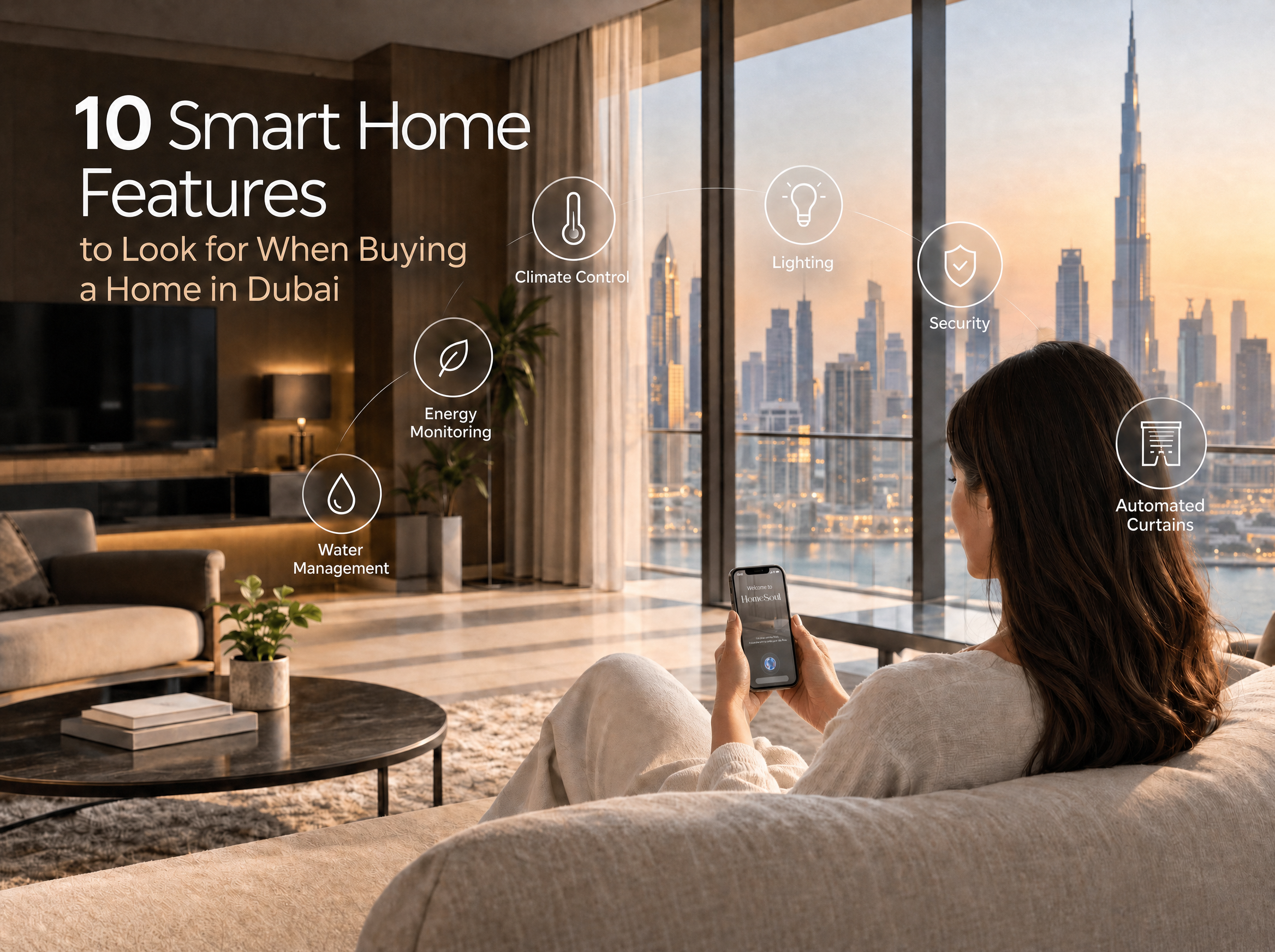
10 Smart Home Features to Look for When Buying a Home in Dubai
Buying a home in Dubai involves more than comparing locations, floor plans and views. As intelligent technology becomes part of residential design, buyers are also looking at how a property can support comfort, security, energy efficiency and everyday wellbeing. But not every apartment marketed as a smart home offers the same experience.
The most useful smart home features in Dubai are those that work together, are easy to manage and continue to serve residents over time. Whether you are considering a smart apartment in Dubai, a waterfront residence or an investment property, these ten features can help you evaluate what genuinely matters.
1. Smart Climate Control for Dubai’s Weather
Cooling is central to daily comfort in Dubai. Smart thermostats and connected air conditioning systems can let residents set schedules, adjust temperatures remotely and avoid unnecessary cooling when a home is unoccupied. Some systems also respond to room occupancy.
When viewing a property, ask whether the climate controls are integrated with the building’s cooling system, what can be controlled remotely and whether manual operation remains available.
2. Intelligent Lighting and Automated Routines
Smart lighting can adjust brightness, colour temperature and timing through an app or compatible voice assistant. Residents might create brighter lighting for work and warmer settings for the evening, while occupancy sensors help prevent lights from staying on in empty rooms.
Look for simple controls and useful preset scenes rather than complicated settings that residents rarely use.
3. Smart Security and Access Control
Connected locks, video doorbells, access notifications and security sensors can offer additional visibility when residents are home or away. In some developments, facial recognition or other digital access technologies may be available in shared spaces.
Ask how access is authorised, how personal data is protected, what happens during a power or internet outage and whether residents can use a physical or offline backup.
4. Indoor Air Quality Monitoring and Filtration
Air quality is an important consideration for wellness-focused homes in Dubai. Smart sensors may measure particulate matter, humidity, temperature and carbon dioxide, while compatible ventilation and filtration systems can respond to changing conditions.
A monitor alone does not clean the air. Buyers should confirm which filtration or ventilation equipment is actually installed, how it is maintained and what information residents can view.
5. Automated Curtains and Blinds
Dubai’s strong sunlight can affect privacy, glare and indoor heat. Automated curtains and blinds can respond to schedules or sunlight levels, helping residents manage daylight and reduce unwanted heat gain.
For apartments with expansive glazing, ask whether the system is included, whether it can be operated manually and whether it connects to other home automation settings.
6. Smart Energy Monitoring
Smart energy management helps residents understand electricity consumption and identify opportunities to reduce waste. Depending on the system, users may be able to review usage trends, schedule connected devices or automate energy-saving routines.
Ask whether consumption data is available at apartment level and which devices are included. Energy savings depend on the building, equipment and residents’ habits, so avoid assuming a fixed reduction in bills.
7. Water Leak Detection and Smart Water Management
Water leak sensors can send alerts when moisture or unusual flow is detected. More advanced installations may support automatic shut-off valves. These features can be particularly practical for holiday homes and Dubai investment properties that are not occupied year-round.
Check which areas are monitored, who receives alerts and whether automatic shut-off is part of the standard installation.
8. Integrated Home Automation Through One App
A connected home becomes more convenient when lighting, cooling, curtains and access settings can be managed through one interface. An integrated platform can support routines such as an Away mode that adjusts selected systems when residents leave.
Before buying, request a live demonstration. Confirm which functions are genuinely integrated, whether the app has ongoing fees and who provides technical support. An AI-powered smart home should offer practical benefits, not simply an impressive label.
9. Smart Wellness and Sleep Features
Technology can also support daily comfort and recovery. Examples include circadian-inspired lighting schedules, bedroom temperature control, air purification and quieter automated routines. Some wellness-focused residential developments also connect home technology with broader lifestyle and wellbeing services.
Evaluate these features by how naturally they fit into everyday life. They can support a more comfortable environment, but should not be presented as guarantees of better sleep or medical outcomes.
10. Future-Ready Connectivity and System Support
Reliable Wi-Fi coverage, structured cabling, software updates and compatibility with established platforms help keep a smart home usable as technology evolves. Buyers should understand whether they own the equipment, whether systems can be expanded and what happens if a vendor stops supporting a device.
Ask about cybersecurity updates, service arrangements, warranties and the availability of offline controls. Long-term maintainability matters as much as new features.
What to Check Before Buying a Smart Home in Dubai
Before committing to a property, request a clear list of standard smart home features and optional upgrades. Ask the developer to demonstrate the system in use and confirm the costs of subscriptions, servicing and replacement parts.
Also review data privacy, cybersecurity, app access for multiple household members, manual overrides and how systems behave during internet outages. For off-plan properties, check which specifications are contractually confirmed rather than relying only on marketing visuals.
How Fakhruddin Properties Approaches Intelligent Living
At Fakhruddin Properties, intelligent technology is considered alongside wellness and sustainability, with a focus on making everyday living more convenient and considered. The brand’s approach includes connected-home experiences through HomeSoul, as well as technology-led services and features across its residential portfolio.
Features vary by development and residence. Buyers exploring projects such as Tréppan Vision should request the latest project-specific specifications to understand which smart home functions, access systems and services are included.
The Future of Smart Living in Dubai
The future of smart homes in Dubai is not simply about adding more connected devices. It is about integrating technology, thoughtful design and practical sustainability so homes can adapt to residents’ needs.
When comparing smart apartments in Dubai, prioritise systems that are easy to use, secure, maintainable and relevant to daily life. The smartest choice is a home where the technology has a clear purpose.
Frequently Asked Questions
What makes a home a smart home?
A smart home uses connected devices or integrated systems to automate and manage functions such as cooling, lighting, security and energy use, often through a central app.
Are smart homes in Dubai energy efficient?
Smart controls can help reduce avoidable consumption through scheduling, monitoring and automation. Actual efficiency depends on the building design, equipment and how the home is used.
What should I check before buying a smart apartment in Dubai?
Check which features are included, whether systems work together, the cost of maintenance, cybersecurity protections, internet dependency and long-term technical support.
Can I control smart home features remotely?
Many connected systems support remote control, but capabilities depend on the specific installation, internet connectivity and permissions. Ask for a demonstration before purchasing.